
Why Your St. Louis Lawn Looks Patchy in Early Summer
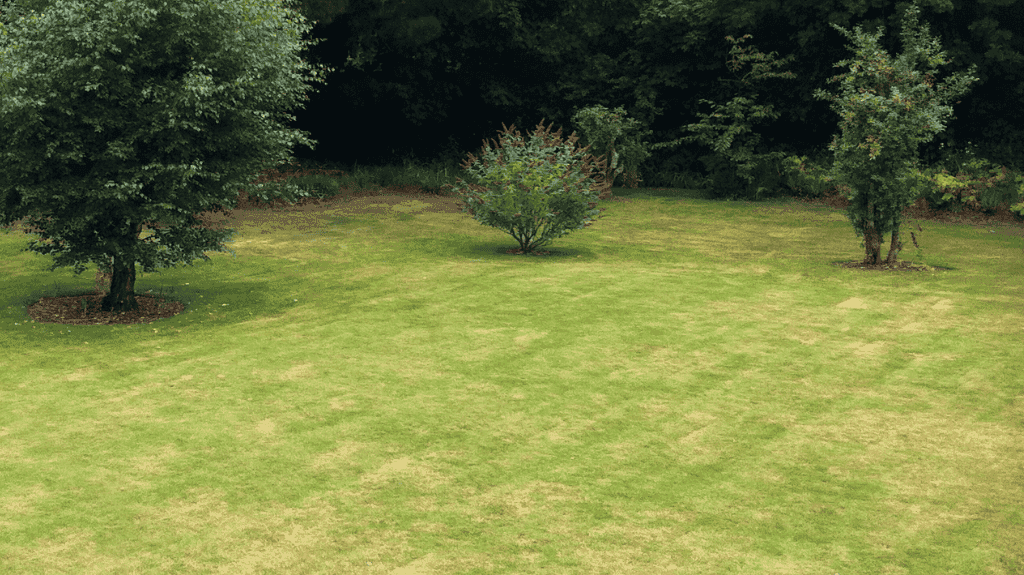
Your lawn looked fine in May. Now it's June, and patches of thinning, discolored grass are showing up in places you can't explain. You've been watering. You haven't changed anything. So what's going wrong?
Patchy grass in early summer is one of the most common concerns St. Louis homeowners bring to lawn care professionals — and it's almost always caused by one of three things: grub damage beginning underground, fungal disease triggered by heat and humidity, or heat stress compounded by inconsistent watering. Sometimes it's a combination of all three.
The good news is that each cause looks different, responds differently to water, and requires a different solution. Knowing which problem you're dealing with is the first step toward fixing it — and toward making sure the damage doesn't get worse through July and August.
This guide covers the three most common reasons St. Louis lawns go patchy in early summer, how to tell them apart, and what to do about each one.
Is It Grubs? How to Tell Before the Damage Gets Worse
Grub damage in a St. Louis lawn is sneaky. The actual feeding happens underground, where white, C-shaped beetle larvae chew through grass roots below the soil surface. By the time you see patches of brown, thinning turf, the root system underneath has already been compromised.
In early June, grub damage from the previous year's egg cycle may be resurfacing as grubs that overwintered in the soil begin feeding again before transforming into adult beetles. New egg-laying by Japanese beetles and June bugs typically begins in early summer, meaning a fresh generation of grubs will be hatching and feeding by midsummer. According to the University of Missouri Extension, grub damage is usually noticed from late July into August — but early signs of weakened turf can appear well before then.
The clearest diagnostic test is simple: grab a patch of affected grass and pull gently. Healthy grass resists. Grub-damaged grass lifts away from the soil with almost no effort — the roots have been severed, so there's nothing anchoring it. If the turf peels back like a loose carpet, grubs are the likely culprit.
Other signs to look for in Chesterfield, Ballwin, and other St. Louis suburbs include:
Irregular brown patches that don't improve with watering
A spongy or soft feeling underfoot in areas that look stressed
Increased bird activity — robins and starlings peck at grub-infested turf
Raccoon or skunk digging overnight along the edges of brown patches
The window for preventive grub treatment in the St. Louis area is early summer, before new larvae hatch and begin feeding. If you suspect grub activity, a professional inspection and targeted treatment now — rather than waiting until August when the damage is severe — can save a significant section of your lawn.
Could It Be Brown Patch? The Fungal Disease That Hits St. Louis Hard in Summer
Brown patch is, according to the University of Missouri Extension, the most important disease limiting tall fescue in Missouri. And tall fescue is by far the most common cool-season grass in St. Louis residential lawns.
Brown patch thrives under a specific set of conditions that St. Louis summers deliver reliably: nighttime temperatures above 68°F and daytime highs above 86°F, combined with extended periods of leaf wetness. If your lawn stays damp overnight — from rain, from evening irrigation, or simply from heavy humidity — the fungus Rhizoctonia solani can establish and spread quickly.
The visual symptoms of brown patch are distinct once you know what to look for. On taller-cut residential lawns, it typically appears as roughly circular or irregularly shaped brown or straw-colored patches, often several inches to several feet in diameter. Individual grass blades along the margin of the patch show a characteristic lesion: a tan or straw-colored center with a dark brown border.
A few things to check if you suspect brown patch in your St. Louis yard:
Are the patches circular or roughly circular in shape?
Do the grass blades themselves show discoloration — not just the overall patch?
Have recent nights been warm and humid, with the grass staying wet for extended periods?
Have you been watering in the evening rather than the morning?
Evening watering is one of the most common contributors to brown patch in St. Louis neighborhoods. When grass stays wet through warm nights, you're creating near-ideal conditions for the fungus to spread. Shifting watering to early morning — so the turf dries out during the day — is one of the most effective adjustments a homeowner can make.
Unlike grub damage, brown patch does not cause turf to peel away from the soil. The roots remain intact. That single test — pull the grass — is often enough to distinguish the two problems.
What About Heat Stress? When the Problem Is Simpler Than You Think
Not every patchy lawn in early summer has a pest or disease problem. Cool-season grasses like tall fescue experience genuine heat stress when temperatures push into the upper 80s and 90s, which happens regularly in St. Louis from June onward. The grass isn't dying — it's struggling to keep up with water demand in high temperatures.
Heat-stressed turf looks dull rather than brown, often taking on a grayish or bluish-green cast. Footprints stay visible longer than usual because the grass blades don't spring back quickly. Stress tends to appear more uniformly across the lawn rather than in defined patches, and it's typically worse in full-sun areas and less noticeable in shadier spots.
The EPA's WaterSense program offers a practical test: step on the lawn. If the grass springs back, it doesn't need water yet. If footprints remain visible for more than a few minutes, the lawn is under moisture stress and watering is warranted. This simple test keeps you from under-watering in genuine heat stress situations — and from over-watering in fungal disease situations where more moisture would make things worse.
For St. Louis lawns, heat stress peaks in July and August, but early signs can appear in June, especially on south-facing slopes and open areas that receive full sun all day. Raising your mowing height to 3.5 to 4 inches allows longer grass blades to shade the soil, reduce surface temperature, and retain moisture more effectively.
How to Diagnose Which Problem You Actually Have
Three problems, three different solutions. Here's a quick field guide for St. Louis homeowners trying to sort out what's happening in their yard.
The Pull Test
Grab a handful of affected grass and pull gently. If it lifts with little resistance and you can see severed roots or no roots at all, grubs are the likely cause. If the grass holds firm and only the blades are discolored, you're dealing with disease or heat stress.
The Watering Test
Water the patchy area thoroughly and observe it over the next few days. Heat-stressed turf responds to adequate moisture — you'll see color begin to recover within a day or two. Grub-damaged turf does not recover with watering because the root system can't absorb it. Brown patch may appear to improve temporarily, then worsen if you're watering at night, since the moisture feeds the fungus.
The Pattern Test
Grub damage creates irregular patches that can spread outward. Brown patch creates rounder, more defined patches with visible lesion patterns on individual blades. Heat stress tends to appear as diffuse dulling across large open areas rather than defined patches, and it's worst where sun exposure is greatest.
The Timing Test
Brown patch intensifies during humid stretches with warm nights. Heat stress gets worse during consecutive days of high temperatures. Grub activity accelerates in midsummer as new larvae hatch and feed. Knowing what the weather has been doing over the past week often points toward the right diagnosis.
What Pure Lawn Recommends for Early Summer Lawn Health
Pure Lawn has been caring for St. Louis lawns — from Kirkwood to Wildwood, from Webster Groves to O'Fallon — for over 40 years. Early summer is when the decisions you make about your lawn have the biggest impact on how it holds up through the hottest months.
A few consistent practices make a significant difference:
Mow at 3 to 4 inches, never shorter. Taller grass shades the soil, conserves moisture, and reduces fungal infection risk.
Water deeply and infrequently rather than lightly every day. Deeper watering encourages roots to grow downward, which makes the lawn more drought-tolerant and harder for grubs to damage fatally.
Water in the early morning — ideally before 9 a.m. — so the turf dries during the day and doesn't stay wet through warm nights.
If you haven't had a professional lawn inspection this season, early summer is the right time. Grub prevention is far more effective than emergency treatment after the damage is visible.
Our lawn fertilization and weed control programs include seasonal monitoring for pest and disease pressure — because the right treatment at the right time is always more effective than emergency repairs in August.
Ready for a Lawn That Doesn't Puzzle You All Summer?
Patchy grass is a problem, but it's a solvable one when you know what's causing it. If you're seeing unexplained damage in your St. Louis lawn this June and aren't sure whether you're dealing with grubs, fungal disease, or heat stress, the most efficient next step is a professional inspection.
Pure Lawn offers free lawn inspections for St. Louis area homeowners. We'll identify what's happening in your yard, explain it clearly, and recommend a course of action — with no obligation. Call or text us at 314-924-LAWN (5296) or visit PureLawn.com to schedule.


